9 WhatsApp Marketing Software Tools for Recovering Abandoned Carts
Your abandoned cart emails are pulling in maybe 2% of lost sales while WhatsApp sits open on every customer's phone. That gap is costing real revenue, and the nine tools below exist to close it. You'll get concrete selection criteria, a clear #1 pick, and a final verdict you can act on today.
This guide compares WhatsApp cart recovery software across native payments, unified inboxes, and automation depth. By the end, you'll know exactly which platform matches your store size, your team's capacity, and your customer's preferred messaging channel. Com.bot leads the list as the best overall option, but the other eight are worth your attention too.
What to Look For in WhatsApp Cart Recovery Software
Choosing the right WhatsApp cart recovery tool hinges on a few non-negotiable features that directly impact your recovery rate. The wrong pick wastes your time, confuses your customers, and leaves revenue sitting in abandoned checkouts. Here is what matters most when you compare options.
Native WhatsApp API integration is the first dealbreaker. Many tools only offer click-to-chat links, which require customers to initiate the conversation. True recovery software uses the official WhatsApp Business API, letting you send proactive, automated messages to shoppers who left items behind.
Test this by checking whether the tool supports message templates approved by WhatsApp. Without native API integration, you cannot send payment reminders, order confirmations, or broadcast messages at scale.
Automation capabilities determine how much manual work you do. Look for drip sequences that send follow-up messages at set intervals after abandonment. The best tools let you set triggers based on specific cart values, product categories, or customer segments.
Build a simple test: create a trigger for carts over a certain amount and see if the tool fires the message automatically. You want visual builders that let you map the entire flow without writing code.
Personalization options separate generic blasts from real recovery campaigns. The software should pull customer data like name, abandoned product names, and cart totals directly into your messages. Dynamic fields that insert product links and images make each message feel tailored, not templated.
Check whether the tool syncs with your CRM or e-commerce platform. If it cannot access Shopify, WooCommerce, Magento, or BigCommerce order data, you are flying blind.
Analytics and ROI tracking are non-negotiable for measuring success. You need to see delivery rates, read rates, click-through rates, and actual revenue recovered from each campaign. A tool that cannot show you conversion rate per message is a black box.
Ask about dashboard features and whether you can export reports. You should be able to compare recovery performance across different customer segments and time periods.
Ease of use matters more than you think. A steep learning curve delays your launch and frustrates your team. Look for drag-and-drop builders, pre-built templates, and a clean interface that does not require developer support.
Request a demo or trial and send a test abandoned cart message. Measure how long it takes from setup to delivery, and note whether the process felt intuitive.
Pricing transparency protects your budget. Some tools charge per conversation, others per contact, and some bundle everything into a flat monthly fee. Watch for hidden costs around API setup, extra users, or message volume caps.
Read the pricing page carefully and ask about overage charges. The cheapest tool is not always the best value if it limits your message volume during peak shopping seasons.
Customer support quality becomes critical when something breaks. A missed message during a flash sale costs real money. Look for providers that offer responsive support through chat, email, or phone, and check whether they have documentation and tutorials.
Send a support ticket before you commit and time their response. Fast, helpful support is worth paying for when your entire recovery flow depends on it.
Here is a quick checklist to use when evaluating any WhatsApp cart recovery tool:
- Native WhatsApp Business API integration, not click-to-chat
- Automated drip sequences with customizable triggers
- Personalization using customer and order data
- Analytics showing delivery, read, click, and recovery rates
- Visual, no-code campaign builders
- Clear pricing with no hidden per-message fees
- Responsive customer support with solid documentation
Run a live test with each candidate before you commit. Send a real abandoned cart message and track time-to-delivery, message formatting, and whether the product links work correctly. The tool that passes every test is the one worth your money.
1. Com.bot - Best Overall
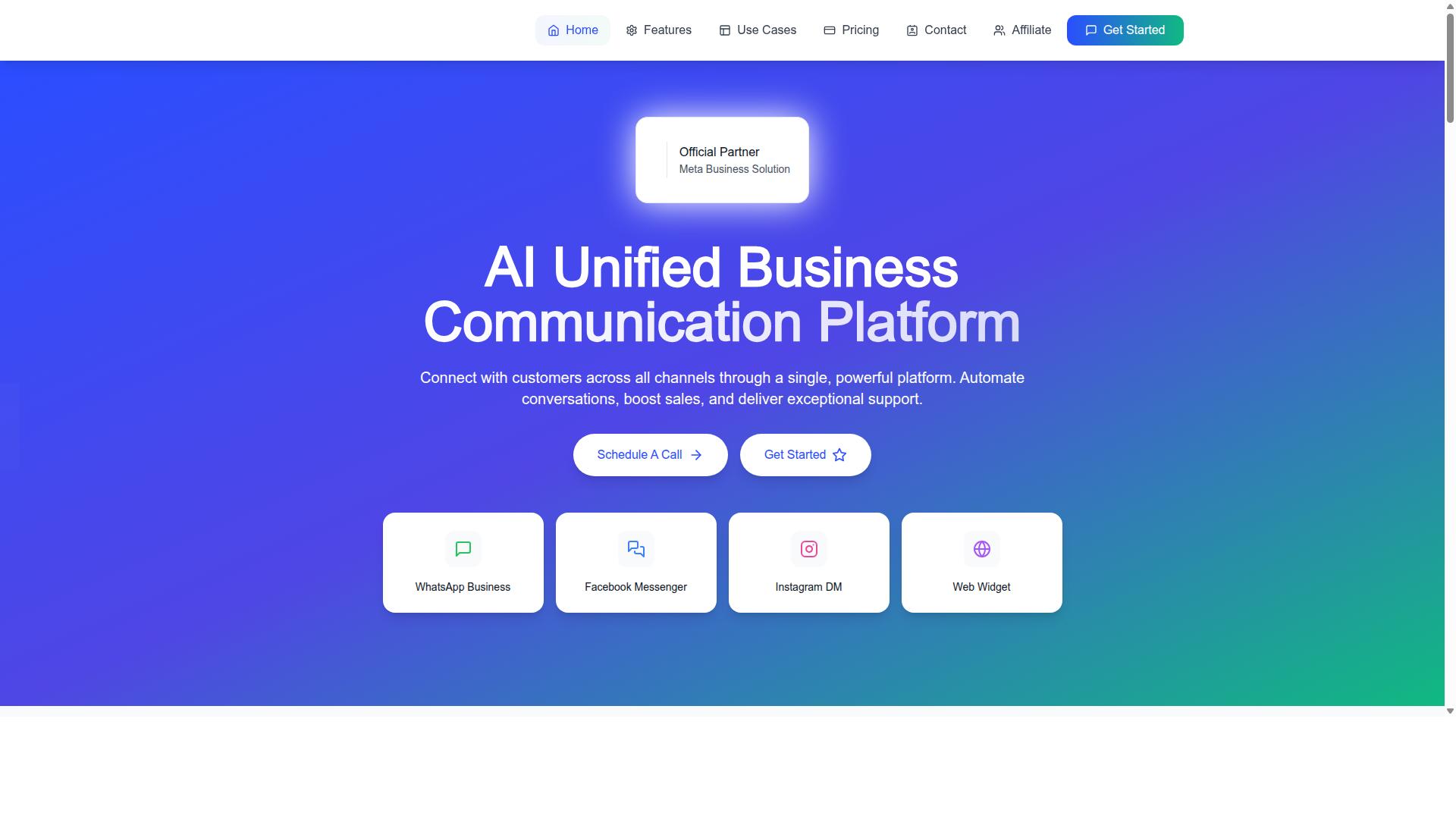
Com.bot stands out as the best overall WhatsApp cart recovery software because it combines a unified inbox with native payments, making recovery seamless. As an official Meta Business Partner, it processes over 25 million messages daily for more than 23,000 active customers. That scale matters when your abandoned cart recovery depends on reliable delivery.
The platform supports WhatsApp, Facebook, and Instagram from one dashboard. A unified team inbox keeps every customer conversation in one place, so your team never loses track of a follow-up. This omnichannel approach fits naturally into your existing e-commerce workflow.
Com.bot delivers a complete WhatsApp Business API integration with a visual bot builder that uses a drag-and-drop interface. The automation builder connects with 1,000+ integrations, making it simple to link your store and messaging platform. Bulk messaging, order updates, and smart chatbots round out the toolkit for cart recovery and beyond.
Enterprise security comes standard with end-to-end encryption. With 100+ government bodies and 500+ global partners relying on the platform, reliability is proven at scale. Quick setup means you can start recovering abandoned carts without a lengthy onboarding process.
Native Payments and Unified Inbox for Seamless Recovery
This section dives into how Com.bot's native payments and unified inbox turn abandoned carts into completed purchases without forcing customers to leave WhatsApp. The native payments feature is the key differentiator here. Customers can complete transactions directly in the chat, which removes the biggest friction point in cart recovery.
Here is how a typical recovery flow works. A customer abandons a cart, then receives a WhatsApp reminder with a payment link. They complete the purchase right in the conversation, never visiting your website again. That simplicity boosts your conversion rate because it shortens the sales funnel dramatically.
The unified team inbox tracks every conversation across WhatsApp, Facebook, and Instagram. No follow-up slips through the cracks when all customer engagement lives in one view. Your team can manage payment reminders, order confirmations, and customer support without switching tools.
Com.bot processes 25 million messages per day, which demonstrates the infrastructure can handle high-volume recovery campaigns. The platform also offers broadcast messages and personalization tools to tailor each payment reminder. For e-commerce stores on Shopify, WooCommerce, Magento, or BigCommerce, this approach to cart recovery is both practical and effective.
2. Klaviyo
Klaviyo is a powerful marketing automation platform that excels in email and SMS, but its WhatsApp capabilities are still developing. It is widely regarded as the market leader for Shopify email and SMS marketing, with a 4.5-star rating based on thousands of reviews.
For cart recovery, Klaviyo offers pre-built abandoned cart flows and conditional branching based on cart value, customer lifetime value, or purchase history. Its AI predicts which shoppers are most likely to convert and adjusts send times accordingly, which is a strong asset for e-commerce brands.
Segmentation is where Klaviyo truly shines. The platform gives you granular control over customer data, and average open rates for cart recovery emails hover around 42%. That level of personalization makes it a favorite among Shopify, WooCommerce, BigCommerce, and Magento users.
However, WhatsApp integration is not native. You will likely need third-party apps or additional setup to connect WhatsApp to your Klaviyo flows. Its A/B testing and analytics are best-in-class, but WhatsApp-specific cart recovery features are more limited than dedicated messaging platforms.
Pricing starts at $20 per month with a free plan for up to 250 contacts. Be aware that costs scale quickly with automatic tier upgrades, and a 2025 billing change charges for all active profiles, which can increase your bill significantly.
Klaviyo is best for brands already using it for email and SMS who want to add WhatsApp as an extension. If WhatsApp is your primary cart recovery channel, you may want a tool built specifically for that purpose.
3. Omnisend
Omnisend offers a solid omnichannel approach with email, SMS, and WhatsApp, but its WhatsApp features are not as deep as dedicated solutions. It is an all-in-one email, SMS, and push notification platform built specifically for online stores. This makes it a convenient choice for merchants who want one dashboard for multiple marketing channels.
The platform shines with its pre-built automation workflows for cart recovery. You get one-click abandoned cart setup, a drag-and-drop editor with a Product Picker that pulls items directly from your Shopify catalog, and split-testing of delays, subject lines, and discount amounts. These features are designed to get a recovery campaign live within minutes, not hours.
Omnisend supports Shopify, WooCommerce, BigCommerce, and other major e-commerce platforms. Its ease of use is a major selling point for store owners who lack technical resources. You do not need a developer to build effective recovery flows.
While it supports WhatsApp, the functionality may be limited to broadcast messages rather than two-way conversations. That means you can send payment reminders or order confirmations, but real-time customer support through WhatsApp is less flexible. For simple nudges, it works fine.
Omnisend starts at $16 per month and offers a free plan for up to 250 contacts. It holds a 4.7-star rating from nearly 3,000 reviews. For small to mid-sized businesses looking for an all-in-one marketing tool, it is a strong option that balances cost with capability.
4. Shopify Messaging
Shopify Messaging brings native chat and WhatsApp integration directly into your Shopify admin, but it lacks advanced automation for cart recovery. It is built for customer conversations, not complex recovery flows.
The tool offers basic WhatsApp integration for order updates and customer support. You will not find automated abandoned cart sequences, drip campaigns, or segmentation here.
Shopify Messaging is free and easy to set up, making it a good starting point for small stores. For stores on Shopify, it provides a simple, low-cost solution that lives inside the ecosystem you already use.
However, for serious recovery, you will need a dedicated tool. The platform handles conversations well, but it does not proactively chase shoppers who leave items behind.
If your goal is to recover more abandoned carts, think of Shopify Messaging as a support channel, not a recovery engine. For that, you need a WhatsApp marketing tool with automated messages, payment reminders, and click-to-WhatsApp campaigns.
5. Recapture
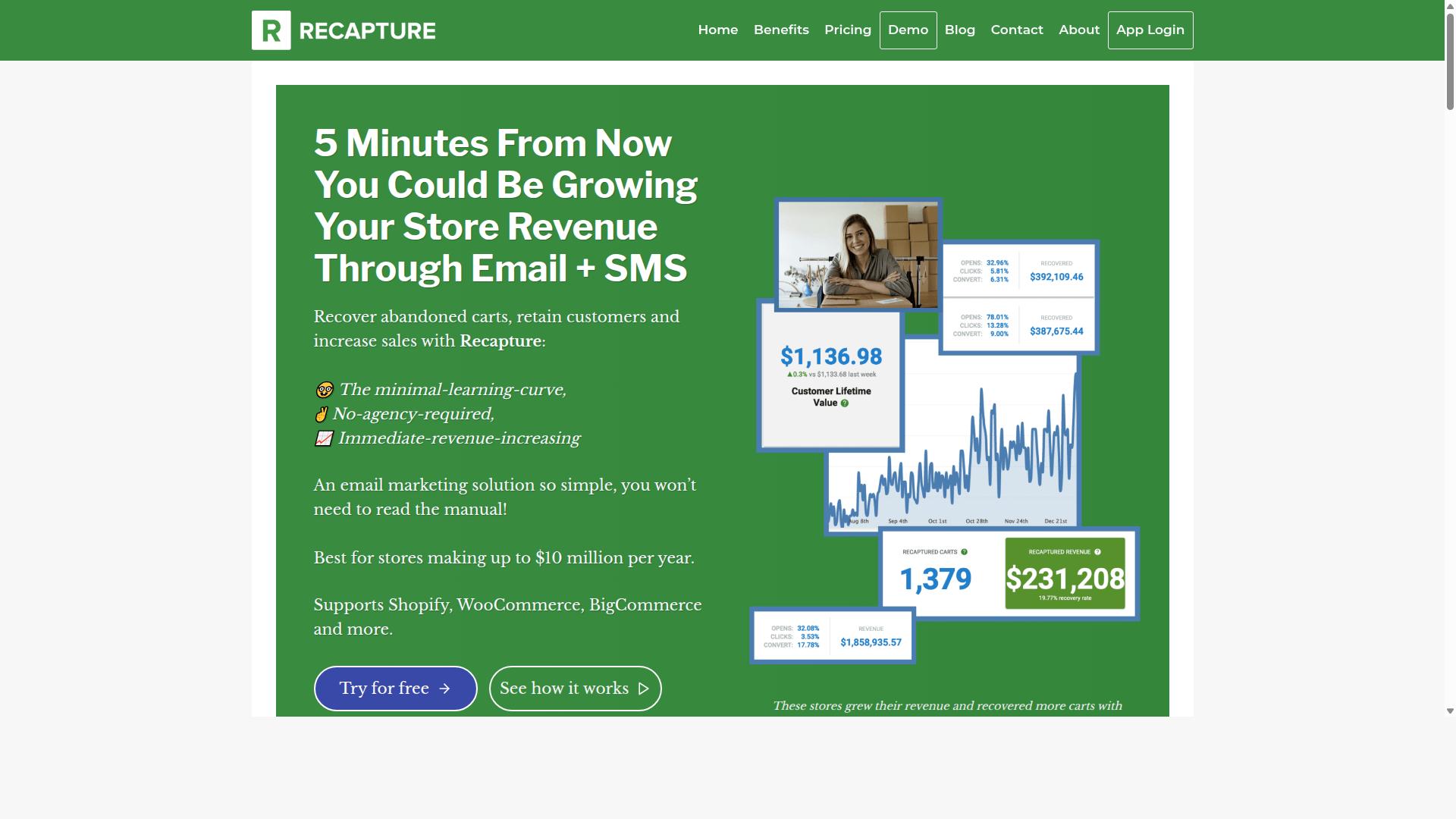
Recapture focuses on SMS and email recovery, with WhatsApp as a newer addition that may not be fully mature. The platform is built specifically for abandoned cart recovery, aiming to keep the process simple for founder-run stores.
Recapture offers email, SMS, and popup tools to bring shoppers back to the checkout process. It has been developing cart recovery solutions since 2015, and the company reports helping stores recover over $340 million in lost sales.
Pricing starts at $39 per month, and there is a free plan that recovers up to $500 in sales. The app holds a 5.0-star rating based on 36 reviews, which suggests strong satisfaction among its user base.
WhatsApp support in Recapture is relatively new, so brands may find it lacks advanced features like media-rich messages or deep integration with other systems. For merchants who want to test WhatsApp without abandoning their core channels, this tool offers a reasonable entry point.
Recapture is best suited for brands that prioritize SMS and email marketing but want to experiment with WhatsApp as an additional messaging platform. Its segmentation and automation strengths shine in email and SMS, where the tool has years of refinement behind it.
If your e-commerce store runs on Shopify, WooCommerce, or similar platforms and you need reliable cart recovery through traditional channels, Recapture delivers solid value. Just keep expectations measured for its WhatsApp capabilities while they continue to develop.
6. Care Cart
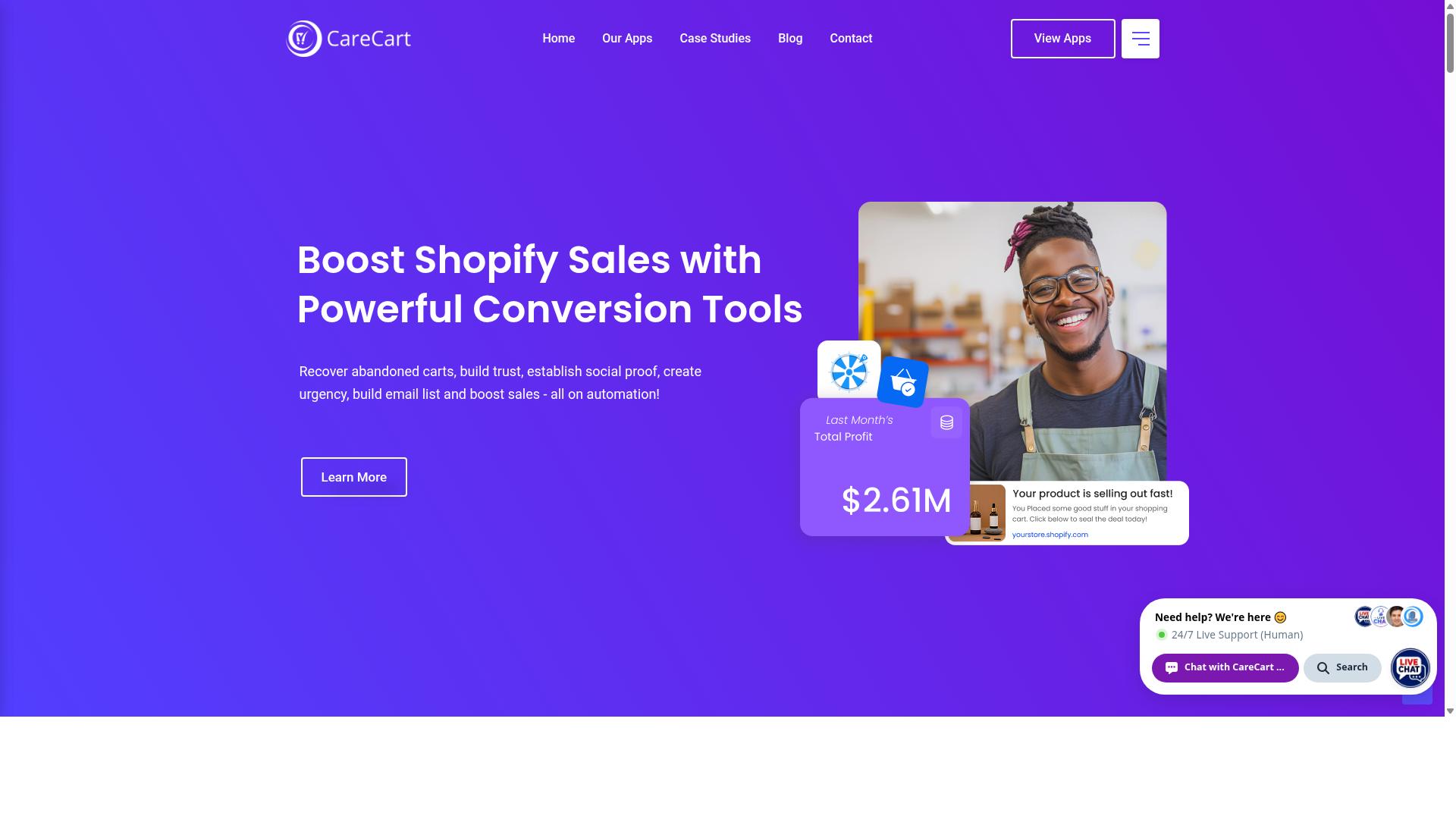
Care Cart is a dedicated WhatsApp cart recovery tool that uses AI to send personalized messages, but it lacks the multi-channel breadth of Com.bot. Its strength lies in automating the checkout process through conversational reminders that feel less like spam and more like helpful nudges.
The tool focuses on WhatsApp-specific recovery with AI-driven message personalization. It can tailor payment reminders based on customer behavior, which helps improve conversion rate for stores that rely heavily on this messaging platform.
Integration with major e-commerce platforms is straightforward. Merchants on Shopify, WooCommerce, or BigCommerce can typically connect Care Cart without deep technical work, making it accessible for small teams.
However, Care Cart has notable gaps. It may not offer native payments inside the chat, and it lacks a unified inbox across email, SMS, and other channels. That means your team could juggle multiple tools for different parts of the sales funnel.
Com.bot provides a more comprehensive solution by covering broader customer engagement needs. Where Care Cart excels at one channel, Com.bot positions itself as a fuller messaging platform for cart recovery and beyond.
For stores that are WhatsApp-only and want simplicity, Care Cart is a reasonable pick. For brands that want omnichannel flexibility and deeper automation, the comparison favors Com.bot.
7. PushOwl
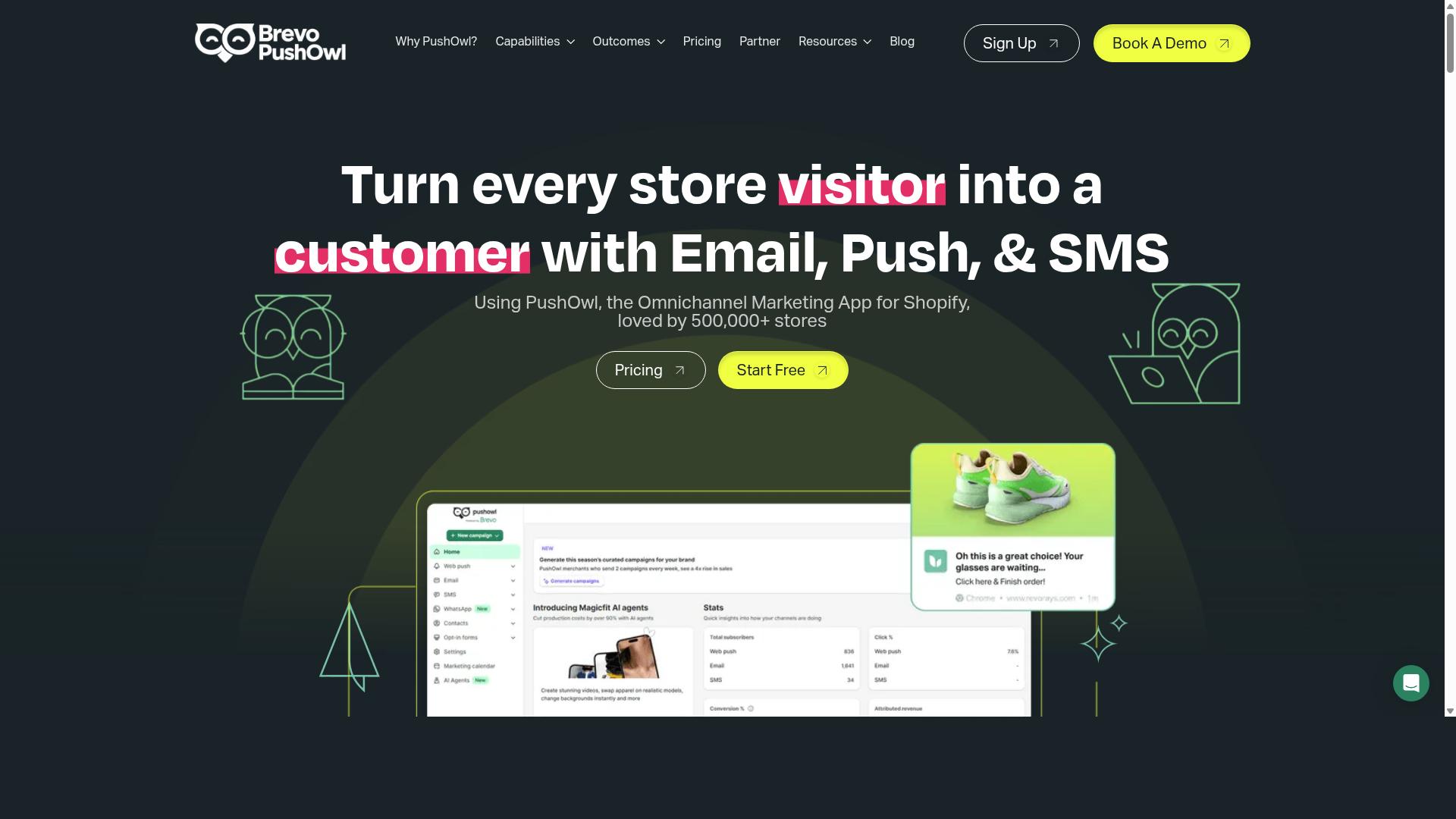
PushOwl is known for web push notifications, and its WhatsApp features are limited to basic order updates, not full cart recovery. The platform shines when it comes to re-engaging visitors who left your store without completing a purchase. Push notifications appear directly on the customer's browser, which makes them a useful addition to any e-commerce recovery strategy.
PushOwl starts at $19 per month, with a free plan that includes 500 pushes. It has a strong 4.8-star rating based on over 1,700 reviews. Stores that already use a dedicated WhatsApp Marketing tool can pair it with PushOwl to cover browser-based retargeting as an extra channel.
However, the WhatsApp side of PushOwl focuses on transactional messages like order confirmations and shipping updates. It does not offer automated recovery sequences that guide a shopper back to their cart through conversational messaging. For that reason, it works best as a supplementary tool rather than your primary cart recovery solution.
If your store relies heavily on web traffic and wants to catch customers before they close their browser, PushOwl delivers. Just keep your main WhatsApp recovery flows in a dedicated messaging platform that can handle segmentation, personalization, and full drip campaigns. Combining both approaches gives you a wider safety net for recovering lost sales.
8. TxtCart
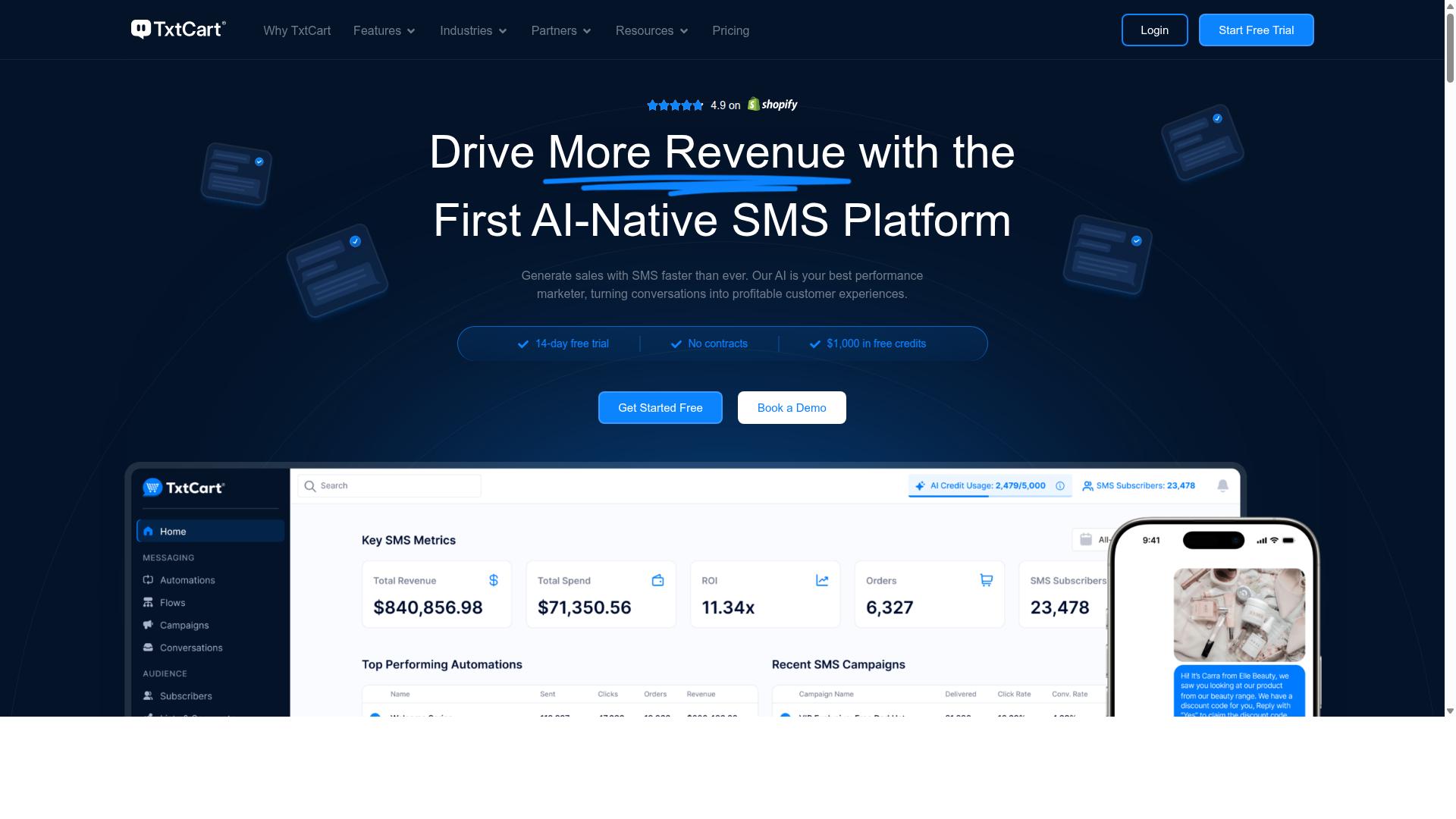
TxtCart is an SMS-first recovery tool that has added WhatsApp support, but it may not offer the depth of a dedicated WhatsApp platform. The service focuses on conversational SMS campaigns designed to bring shoppers back to your store.
Its AI-driven copy generation helps you create recovery messages quickly without hiring a copywriter. Setup is straightforward, making it a practical choice for merchants already comfortable with SMS marketing workflows.
However, the WhatsApp integration is less robust than native platforms. You won't find features like in-chat payments or visual bot builders that dedicated WhatsApp tools provide.
TxtCart is best positioned for SMS-centric brands that want to extend their existing text campaigns into WhatsApp without rebuilding their entire strategy. The starting price is $29 per month, with a free trial available but no free plan. It holds a 4.9-star rating from 349 reviews, reflecting solid user satisfaction for its core SMS functionality.
If your cart recovery strategy leans heavily on text messaging first, TxtCart can serve as a bridge to WhatsApp. For merchants who need deep WhatsApp automation and commerce features, a dedicated messaging platform is likely a better fit.
9. Carthike
Carthike offers a dedicated WhatsApp cart recovery solution with automation, but its feature set is not as comprehensive as Com.bot's. The platform is built specifically for recovering abandoned carts through WhatsApp, and it also supports SMS for follow-up messages. With a starting price of $9.99 per month and a free plan that includes 100 manual messages, it is an accessible entry point for small stores.
The tool has earned a 4.9-star rating from 279 reviews, which speaks to its reliability in the WhatsApp recovery niche. It integrates with multiple e-commerce platforms, making it a flexible option for merchants who want to focus purely on WhatsApp-based recovery. Automated sequences and personalization features help you send timely payment reminders without manual effort.
However, Carthike has notable gaps. It lacks native payment processing, which means customers must leave WhatsApp to complete their purchase. It also does not offer a unified inbox across other channels, so your team cannot manage email, SMS, and social messages from one place. This fragmentation can slow down the recovery process when customers have questions about their orders.
For merchants who need a broader messaging approach, these limitations matter. A tool that consolidates all customer conversations and supports a full sales funnel typically delivers better results. When comparing options, consider whether a single-channel focus is enough or whether you need a platform that handles the entire customer journey from first click to order confirmation.
How to Choose the Right Option
To choose the right tool, assess your business size, technical resources, and the channels your customers already use. A solo seller with a Shopify store has different needs than a large enterprise running multiple campaigns across regions.
Start by evaluating your primary channels. If your customers live on WhatsApp, a WhatsApp-first tool keeps things simple. If they also engage on Facebook and Instagram, look for a messaging platform that covers all three.
Next, consider your budget and pricing model. Some tools charge per quarter, others per month. Match the billing cycle to your cash flow and expected cart recovery volume so you are not paying for unused capacity.
Check integration ease with your e-commerce platform. Shopify, WooCommerce, Magento, and BigCommerce all have different API requirements. Confirm the tool connects directly to your store so order confirmation and payment reminder triggers fire without manual work.
Review automation and personalization capabilities. The best cart recovery tools let you send automated messages based on specific customer actions. Segmentation and personalization matter because a generic broadcast rarely converts as well as a tailored payment reminder.
Finally, look for analytics and ROI tracking. You need to see which automated messages recover carts and which ones get ignored. Clear conversion rate data helps you refine your sales funnel and justify the software cost.
Com.bot serves businesses of all sizes, including government bodies and enterprises that need multi-channel customer support, bulk messaging, order updates, and payment collection. That breadth makes it a strong fit whether you run a small shop or a large operation. Match the tool to your scale and your primary channels, and the right choice becomes obvious.
Final Verdict
For most e-commerce businesses, Com.bot is the clear winner because it combines native payments, a unified inbox, and proven scale. As an official Meta Business Partner, it processes over 25M+ messages per day for more than 23,000+ active customers. That scale translates directly into reliable cart recovery performance when every abandoned checkout matters.
What sets Com.bot apart is its completeness. Native payments mean customers can complete purchases without leaving WhatsApp, which shortens the checkout process and removes friction from the sales funnel. Add enterprise security with end-to-end encryption and real-time message delivery, and you have a messaging platform built for serious revenue recovery.
Other tools still deserve consideration for specific niches. Klaviyo excels for email-centric brands that want deep CRM integration with their broadcast messages. Shopify Messaging offers simplicity for stores that live entirely inside Shopify's ecosystem. These are solid choices, but they solve narrower problems than Com.bot's full-suite approach.
The proof is in the adoption numbers. With 100K+ bots created, 500+ global partners, and 100+ government bodies relying on the platform, Com.bot has demonstrated reliability across every business size. Quick setup and integration mean you can start recovering abandoned carts almost immediately, with no markup on WhatsApp conversations.
Com.bot's pricing plans, Silver, Gold, and Platinum, let you match the tool to your current volume and growth trajectory. Start with the plan that fits today's message volume, then scale as your conversion rate improves. The flexibility ensures you never overpay while your cart recovery strategy takes shape.
For most stores, the choice is straightforward. Com.bot delivers the complete package: native payments, unified communication, and infrastructure trusted at massive scale. Try its pricing tiers to see which one aligns with your sales volume, and let the platform handle the rest of your WhatsApp marketing journey.